Recently, I saw an ad with a family stringing cranberries to make a garland and I thought of an analogy by the 20th century apologist, Cornelius Van Til. Van Til uses an analogy of beads on a string to explain how Christians makes sense of facts. I’ll explain his analogy, share quotations from his writings, and then offer suggestions for activities to help students grasp it.
In the simplest terms possible, Van Til’s analogy can be understood like this:
The beads are facts and the string is the Bible.
Van Til taught his students that since God created everything, every fact should be understood as a created fact. This may sound basic, but it sets Christianity in direct conflict with the idea that facts arise by chance in a chance universe.
As Creator, God knows everything about everything.
As finite creatures with limited knowledge, we don’t.
We need God’s help to make sense of facts and how they relate to one another, so we turn to the Bible.
Why do we need the Bible to make sense of facts? Van Til says to truly understand the full meaning of any fact, even a math fact such as 2+2=4, we must interpret it within the Christian worldview. To really know 2+2=4 is not merely to know the symbols or the sum, but to comprehend its full meaning as an immaterial, unchanging fact which God created. Seen in light of Creation and Scripture, no fact is arbitrary or accidental. Facts are rightly understood as expressions of His will and nature. The Chistian understanding of fact provides a standard for interpretation and meaning.
By studying the Bible, and to a lesser extent Creation, we come to understand facts rightly and fully. The Bible helps us “string the beads.” Without knowledge from God, facts would have no unifying principle, no relation to one another. Van Til says no “fact” is seen as it really is unless it is seen in its correct relationship to God. (Foundations of Christian Education, 16)
Here are some additional quotations by Van Til discussing these concepts in contrast to non-Christian systems:
“A scientific method not based on the presupposition of the truth of the Christian story is like an effort to string an infinite number of beads, no two of which have holes in them, by means of a string of infinite length, neither end of which can be found.” (The Protestant Doctrine of Scripture)
“There would be no possibility even of finding a single fact in a universe of chance. Individual men would have no common notions with other men; they would not even be able to distinguish themselves from other men. Observation of facts would be impossible because the idea of a fact is, on this basis, unintelligible. And if facts were found, they could not be brought into a pattern….There would be no God distinct from man. There would be no creation out of nothing. There would be no fall. Ther would be no historic Christianity. There would be one common blur.” (Defense of the Faith, 4th ed., 191)
“If the world were what they [non-Christians] assume it is, it would, as it were, consist of an infinite number of beads no two of which can be strung because they have no holes in them” (Christian Theory of Knowledge, 1969 edition, 309; 2023 edition, 315)
On the Christian view, the universe is ordered harmoniously and each fact is part of God’s divine plan. Van Til assumed Christian educators would understand these concepts and incorporate them into their respective subjects:
“Christian teachers know that not a single “fact” can really be known and therefore really be taught unless placed under the light of the revelation of God. Even laws of arithmetic cannot be known otherwise.” (Foundations of Christian Education, 4).
Here are some simple ways to teach students these concepts using inexpensive materials on hand.
Optional Activities:
- String cranberries on a string to make a decorative garland. As you string the cranberries, tell students each berry is a fact. Use age appropriate facts at your discretion. For younger students, keep them simple, such as “My name is___,” “I am___years old,” and, “I live in___.” Tell them God created these facts about them and He knows them all. As you string a bead, state the fact and talk about how God’s word makes sense of it, e.g. God knew them before they were born (Jer. 1:5), knows their name (John 10:3), created the world for them to live in (Gen. 1:1), and determined the day of their birth (Ps. 139:16), etc.


During the Christmas season, you might focus on facts from Luke 2, i.e. “Jesus was born in Bethlehem,” or “Mary placed baby Jesus in a manger.” Explain to students that we know these facts of the Christmas account from the Bible. Hundreds of years before Jesus was born, men of God prophesied facts about Jesus’ birth, and then men recorded their fulfillment in the gospels. The Bible reveals the facts about our Savior and helps us understand what they mean.

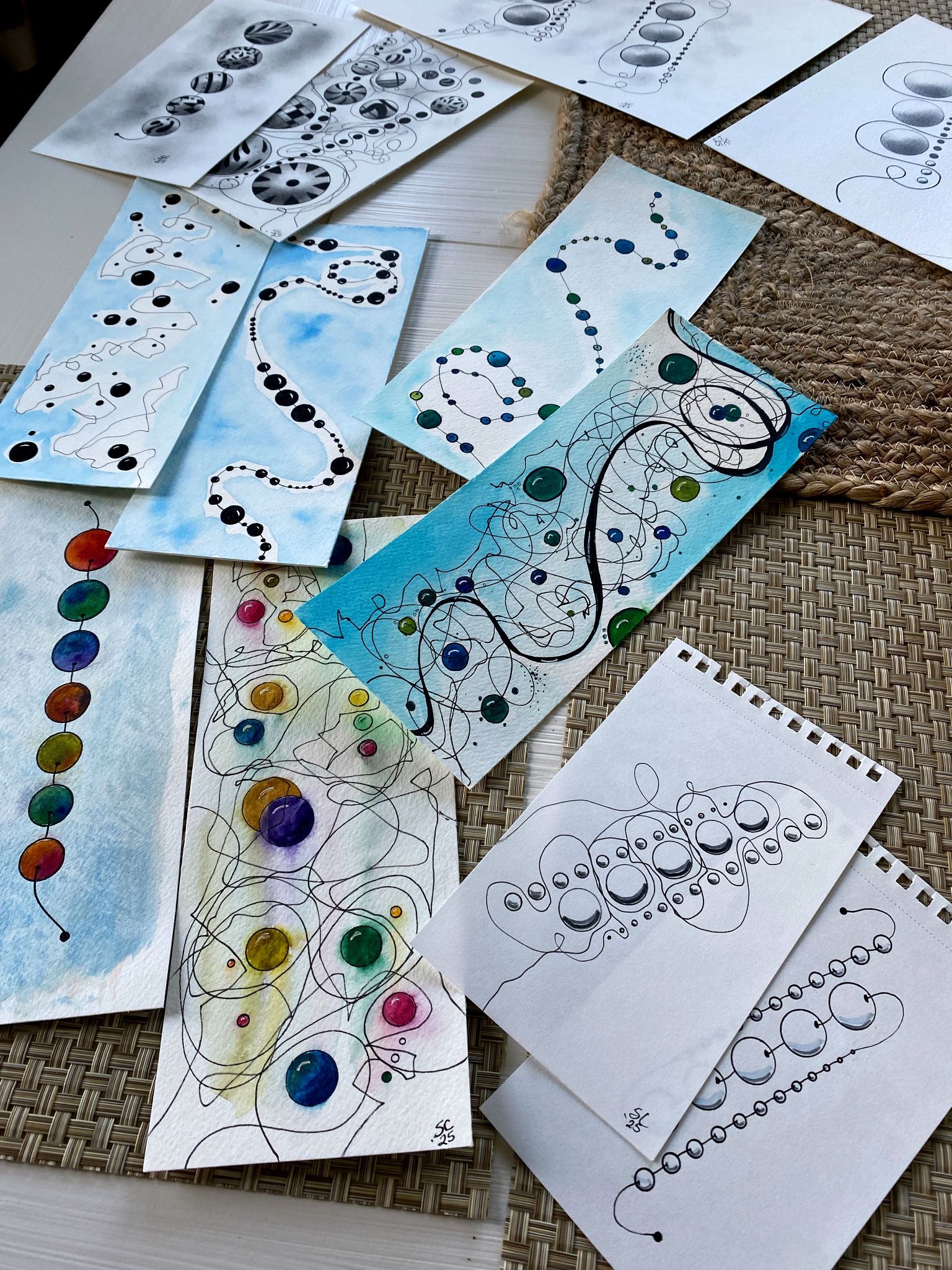
- Visualize Van Til’s analogy with an art project. Using two pieces of paper, have students draw beads without holes, unable to be strung on one piece, and beads nicely strung on the other piece. Placing them side by side helps students see the contrast between non-Christian and Christian systems.
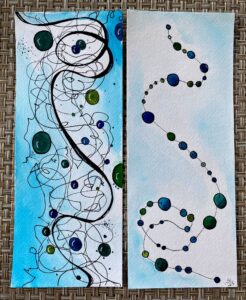
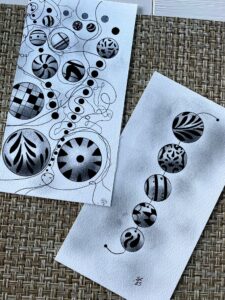
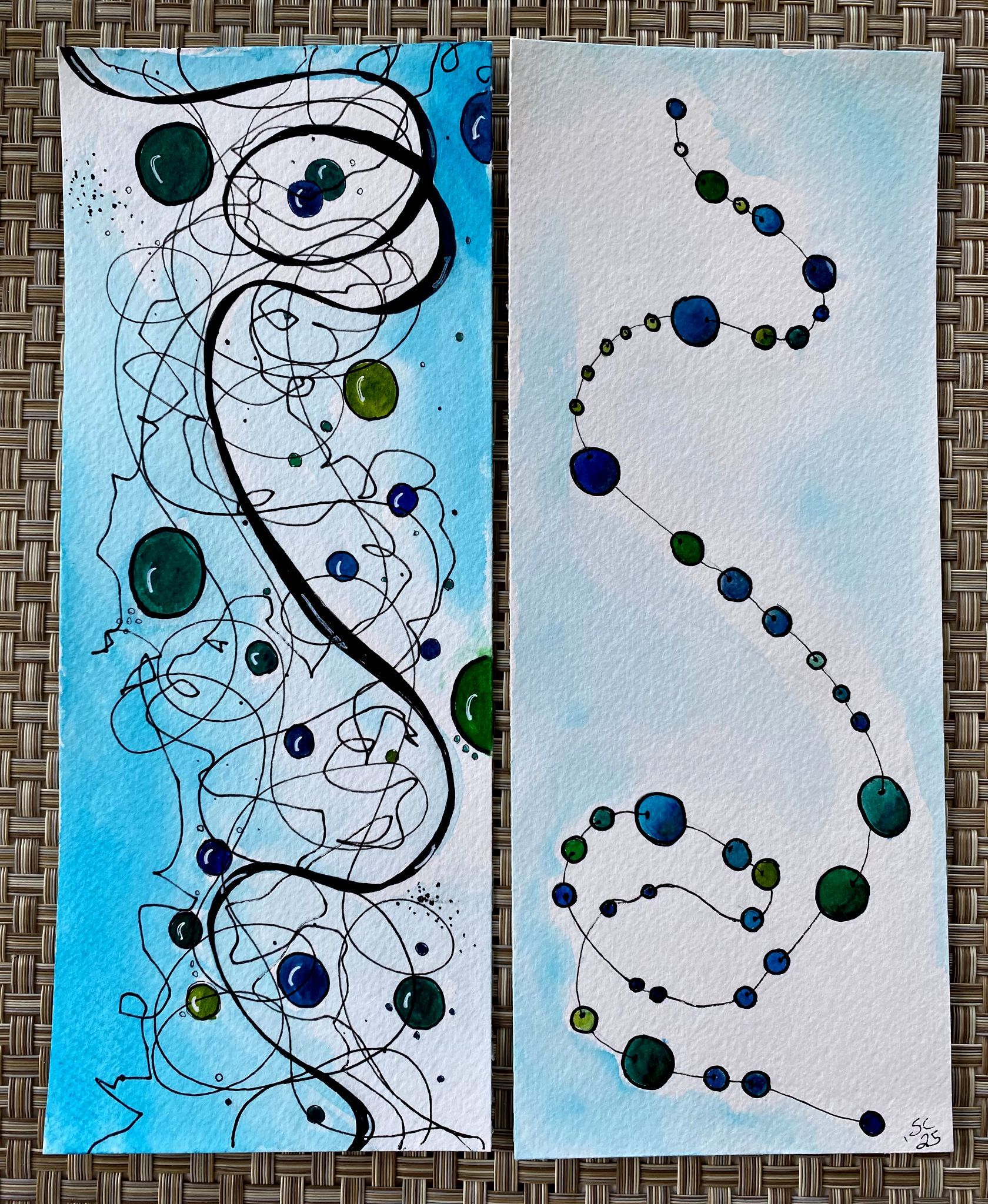
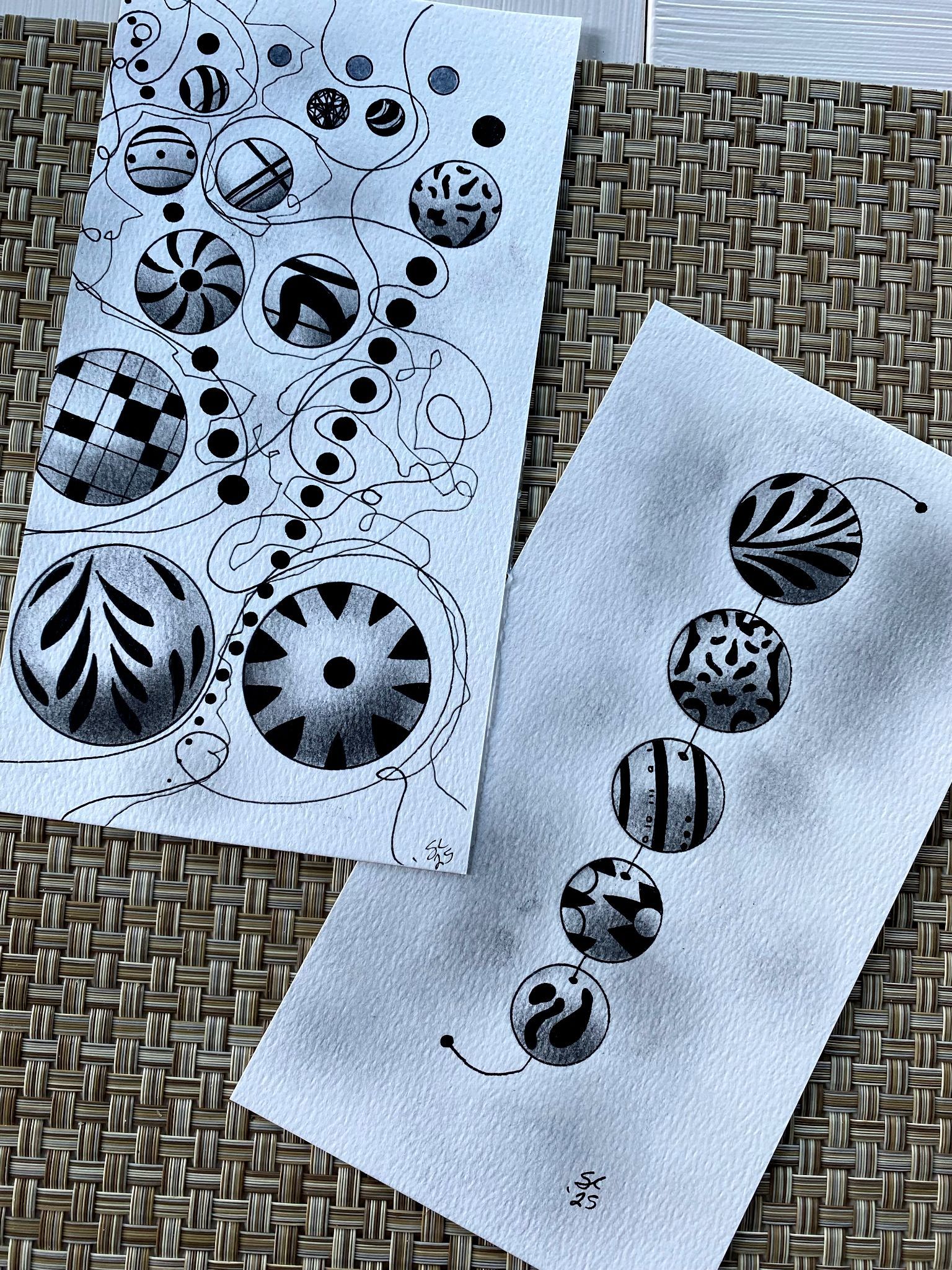
3. During the Christmas season, have students string ornaments on a ribbon. This would also work to visualize Van Til’s analogy. The ornaments represent facts and the ribbon represents what God tells us about the facts.

Teacher’s Note: This activity is meant to teach two basic truths:
- Every fact is a created fact.
- God’s revelation helps us make sense of facts.
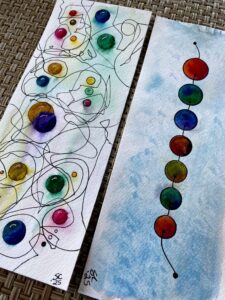

Van Til’s writings are philosophically complex, but I’m convinced that exposing students to analogies like this will have a profound effect on the way they think about facts, including facts about God, themselves, and reality. If you teach Van Til’s concepts using any of these activities, I would love to hear from you. Please leave a comment below if you have additional questions, ideas, or suggestions!
Merry Christmas!
Good read Scarlett.
Good read Scarlett.
Thank you, Mr. Burton!
Merry Christmas!
I love how you took a complex idea and made it accesible to people of all ages! You are an excellent teacher Scarlett- may the Lord use your gifts to build up the body of Christ for His glory🙏🏼
Thanks so much for your kinds words, Sabrina!
Merry Christmas to you and yours!