America is experiencing an explosion of interest in the Chinese strategy game called Mahjong. Yelp data shows that searches for Mahjong clubs are up almost 4,500% since last year. The primary explanation given for the surge in interest is the desire for meaningful offline social connections. People want to be with people and meeting together for Mahjong satisfies that desire.

From a Christians worldview standpoint, the human desire for social interaction reflects the imago Dei. People are not merely isolated minds, but relational beings created in the image of the triune God, whose nature is eternal fellowship among the three persons of the Godhead: Father, Son, and Holy Spirit. This is why screen-based substitutes feel insufficient. Online connections cannot fully replace the deep satisfaction found in face-to-face communication. Christianity makes sense of this longing by teaching that we were created for covenantal relationship with God and with one another. Sin complicates personal relationships, but it does not erase our built-in need for human connection. This is one of the reasons belonging to a local church is so important. In Christ, believers are restored into a true community—the local church—where real, physical gatherings and shared life together reflect God’s intent for human flourishing (Hebrews 10:24–25). Our desire to sit together, speak together, and play together offline is not accidental; it reflects our created nature and points to the ultimate fellowship we were made for with God Himself.
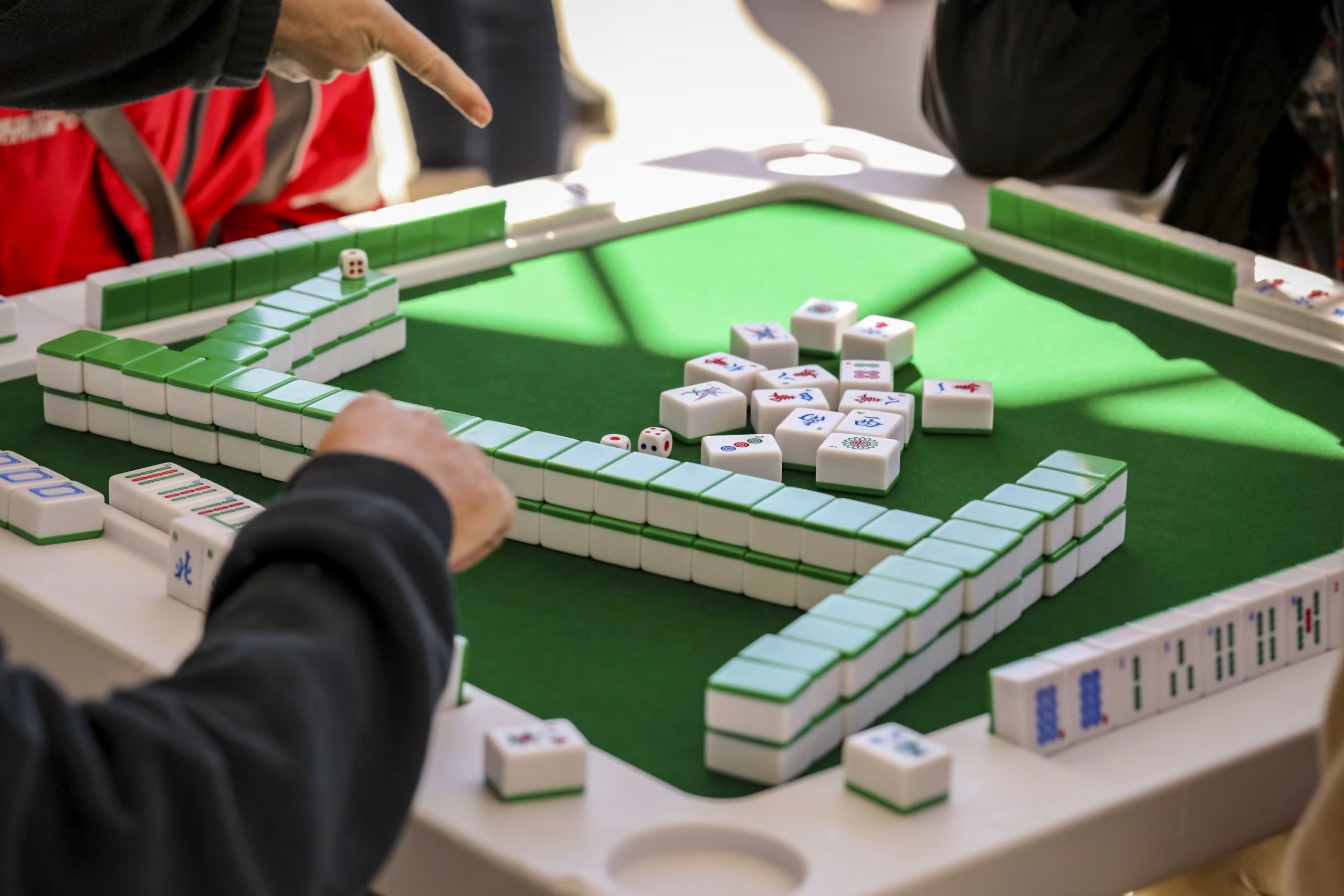
Additionally, Mahjong illustrates that human beings cannot escape living in God’s world, even when they are playing games. Mahjong is governed by fixed rules that every player must follow if meaningful play is to occur. Without predictable order, such as the consistent identities of the tiles, the game would dissolve into chaos. Because God created the universe with inherent order and consistency, craks, bams, and dots will remain craks, bams, and dots game after game. The dragons, flowers, and jokers will remain consistent, as well. Likewise, the Mahjong cards which are published each year create another layer of order. It is true that the winning hands for 2025 are not the winning hands for 2026, but the process is still subject to order. Annual Mahjong cards are issued each passing year with an updated set of winning hands. Every Mahjong player knows the winning hands for the year will change with the New Year. It is consistent and predictable, not to mention profitable for the publisher! All these aspects of the game reflect the biblical doctrine that God is not a God of confusion but of order (1 Corinthians 14:33), and that all things hold together in Christ (Colossians 1:17). No true game is possible without order and consistency because God made the world to function in an orderly way. As Cornelius Van Til repeatedly argued, intelligibility is possible only because the triune God has established an orderly creation.
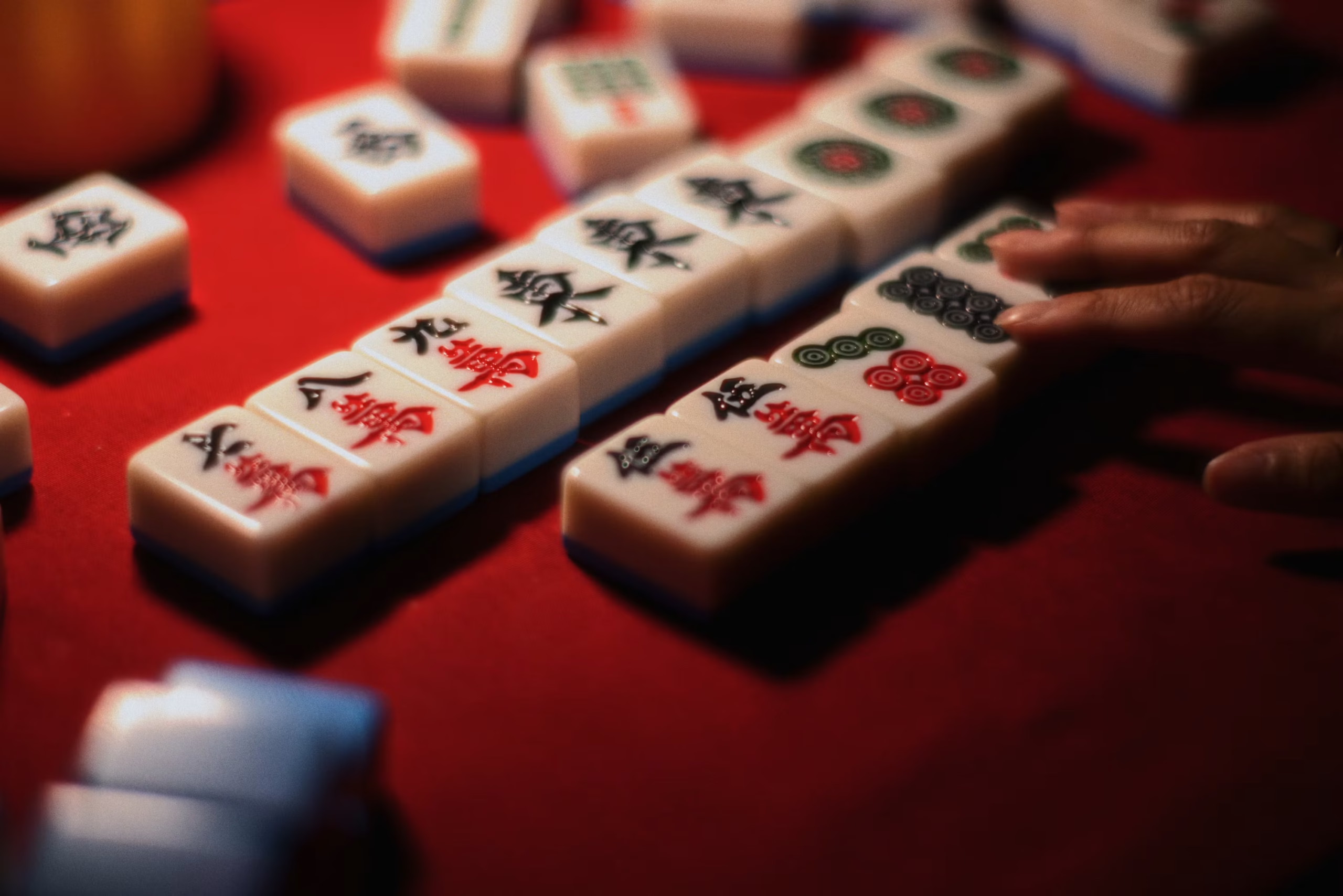
From a presuppositional standpoint, the relationship between chance and skill in the game exposes the impossibility of an autonomous worldview. The initial draw of the tiles appears random from the human perspective, yet Scripture denies that anything occurs outside God’s sovereign decree: “The lot is cast into the lap, but its every decision is from the LORD” (Proverbs 16:33). The Christian therefore rejects the notion of metaphysical chance. What appears accidental to finite creatures is governed exhaustively by divine providence. A victory is secured by memory and disciplined decision-making, not merely by drawing favorable tiles. This reflects the biblical pattern that God accomplishes His sovereign purposes through responsible human action. The player must exercise dominion over the circumstances God has assigned rather than surrender to fatalism or trust in luck (Proverbs 2:6). As Greg Bahnsen frequently argued, God’s sovereignty never nullifies human responsibility; instead, it provides the very foundation that makes meaningful action possible. The compatibility of sovereignty and human freedom makes the game of Mahjong possible and entertaining.
And what about aesthetics? There is an undeniable aesthetic aspect to Mahjong: the neatly stacked “walls,” the perfect row of tiles pushed out by the rack, the beauty, symmetry and design of the tiles all point to a Creator, whose works are intrinsically beautiful (Psalm 19:1). Even the brisk clicking of tiles on the racks adds a tactile and auditory aspect which contributes to the overall enjoyment of gameplay. Aesthetically, Mahjong is a lovely game.
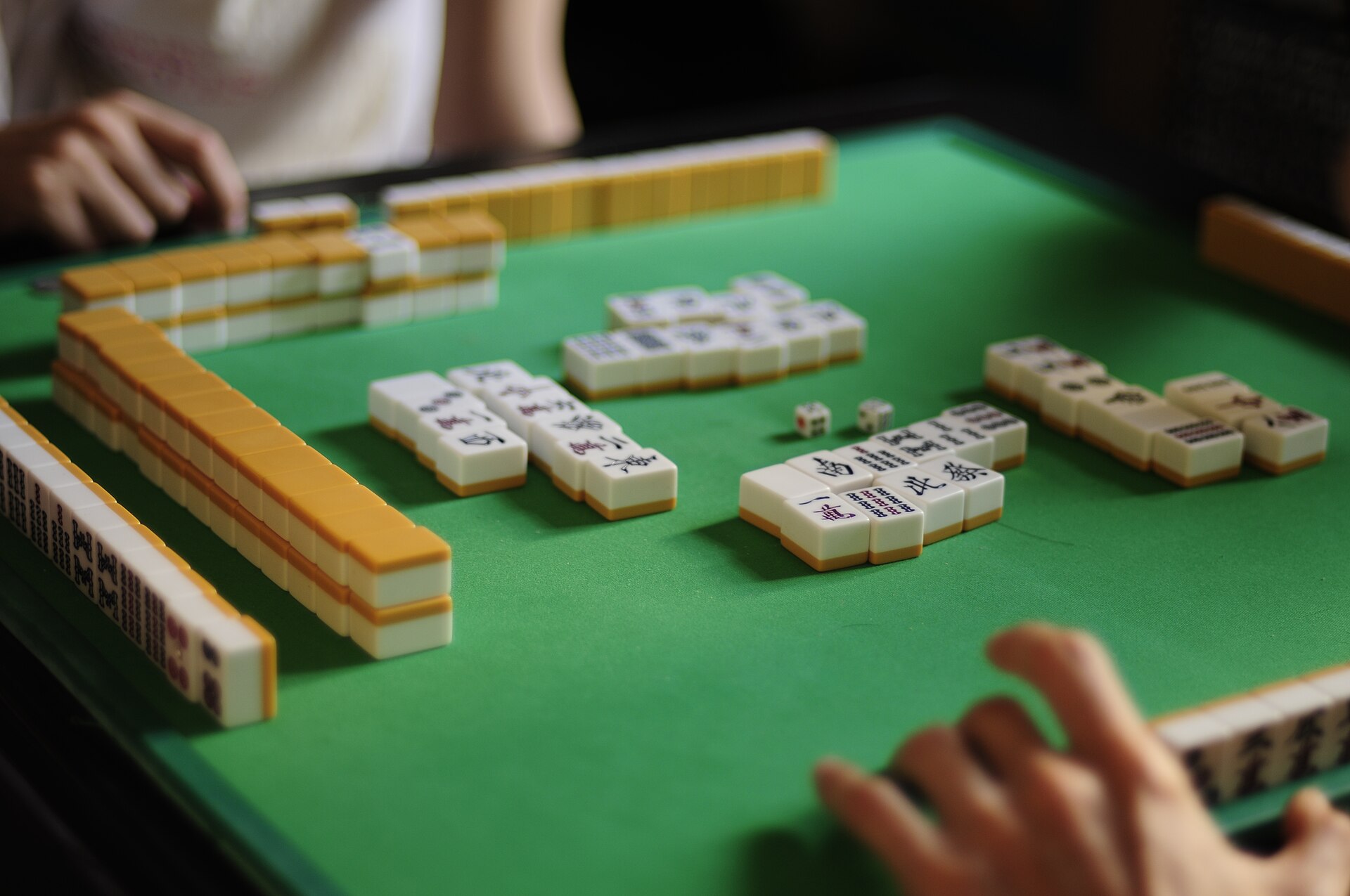
Carefully considered, Mahjong becomes an apologetic illustration of the Christian worldview rather than evidence for chance or impersonal fate. The game’s intelligibility presupposes objective laws of logic, moral norms of honesty, orderly rules, meaningful beauty, and a universe governed by providence rather than chaos. The non-Christian may speak of “luck,” or “chance,” but these concepts cannot account for the rational confidence with which every player expects the rules to remain constant or strategic thinking to arrange a winning hand. The Christian worldview alone provides the preconditions for such confidence because the sovereign, personal God governs all events. Mahjong reveals numerous reminders that every area of life bears witness to the lordship of Christ, “for from Him and through Him and to Him are all things. To Him be glory forever. Amen” (Romans 11:36).