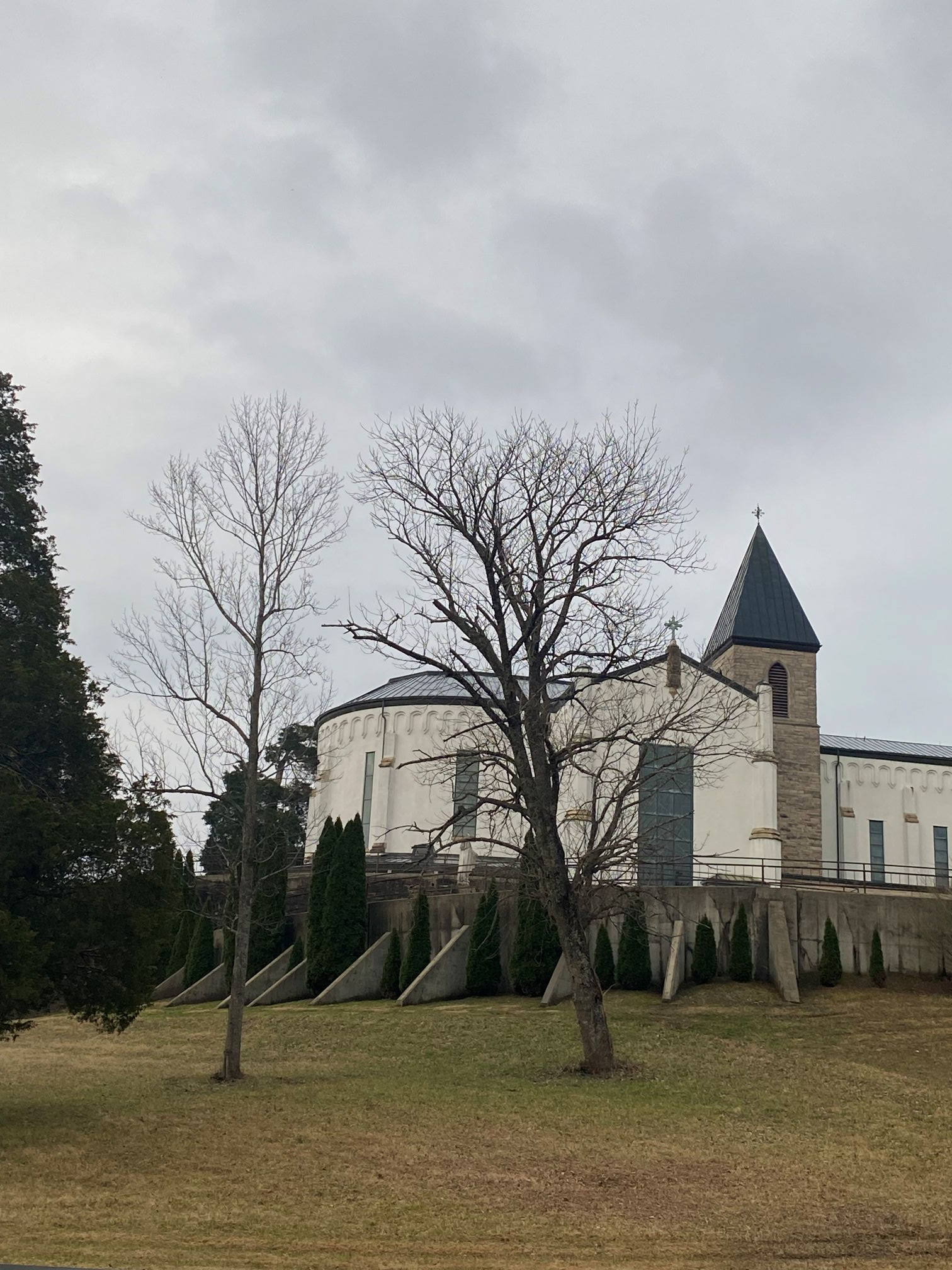
Last month, I ventured out on a short retreat to Gethsemani Abbey in Trappist, Kentucky. The Abbey is a Roman Catholic monastery founded in 1848 and is the oldest Trappist monastery in the U.S. The Trappists are Cistercian monks, only stricter, with a greater focus on silence and manual labor. I discovered the Abbey through a catalog that came to my mailbox at Christmas, showcasing the Abbey’s famous fruitcakes and bourbon fudge.
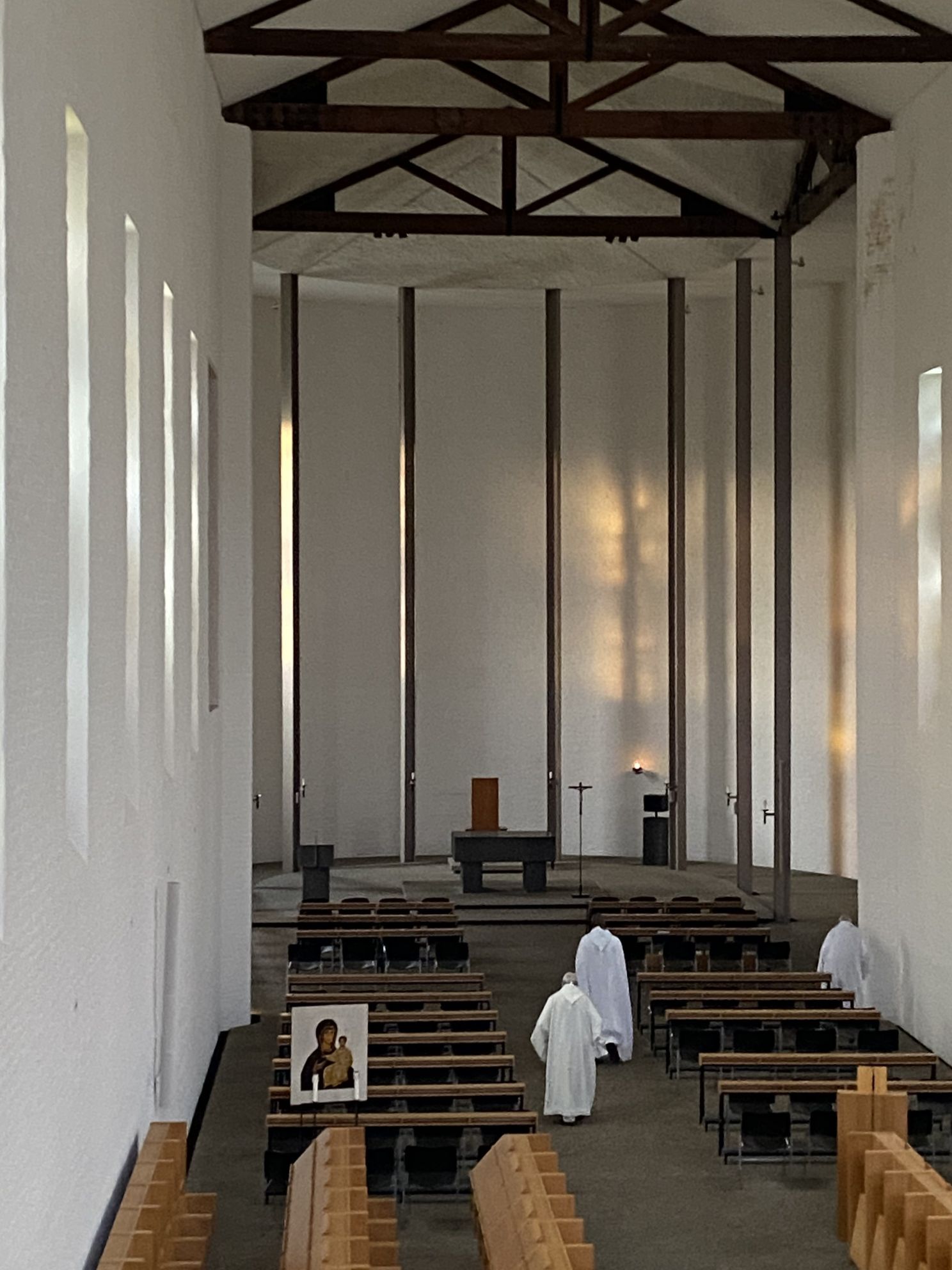
The Trappists live according to the Divine Office and I attempted to follow along, but the 3 a.m. Vigils comes too early! After attending a few services, I couldn’t help but notice that there were only a few monks present. On the third day, I stopped in to ask the chaplain, Fr. Timothy Kelley, about the size of the order.
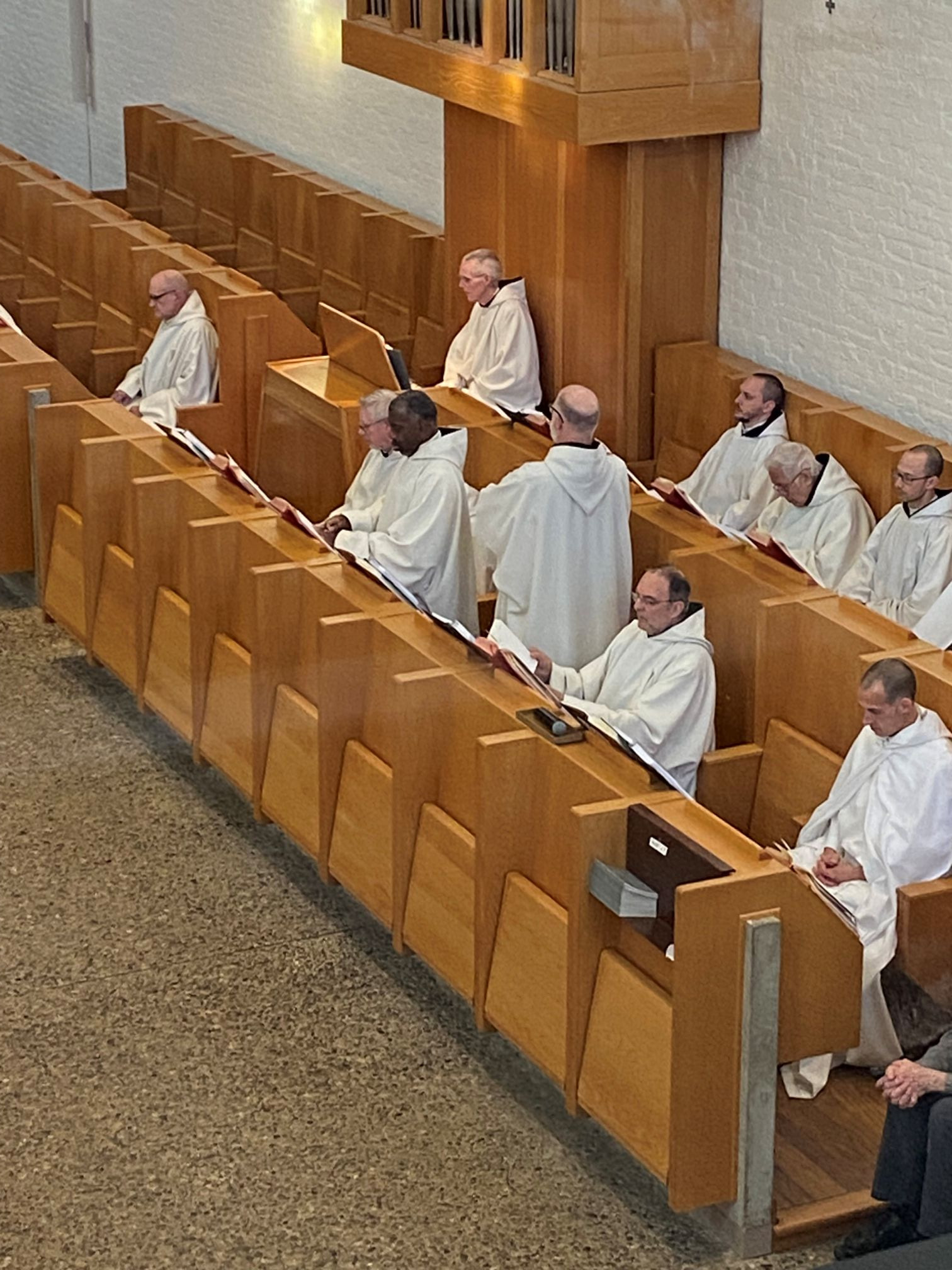
Fr. Kelley told me when he first came to the Abbey in the 60s, there were over 250 monks living there. Currently, there are only 38. I asked him what this meant for the future of the Abbey and he smiled a big smile and simply said, “By God’s grace.” Fr. Kelley has hope for the Abbey because of his hope in the unfailing grace of God; blessed is the one who trusts in the Lord, whose confidence is in him. (Jer. 17:7)
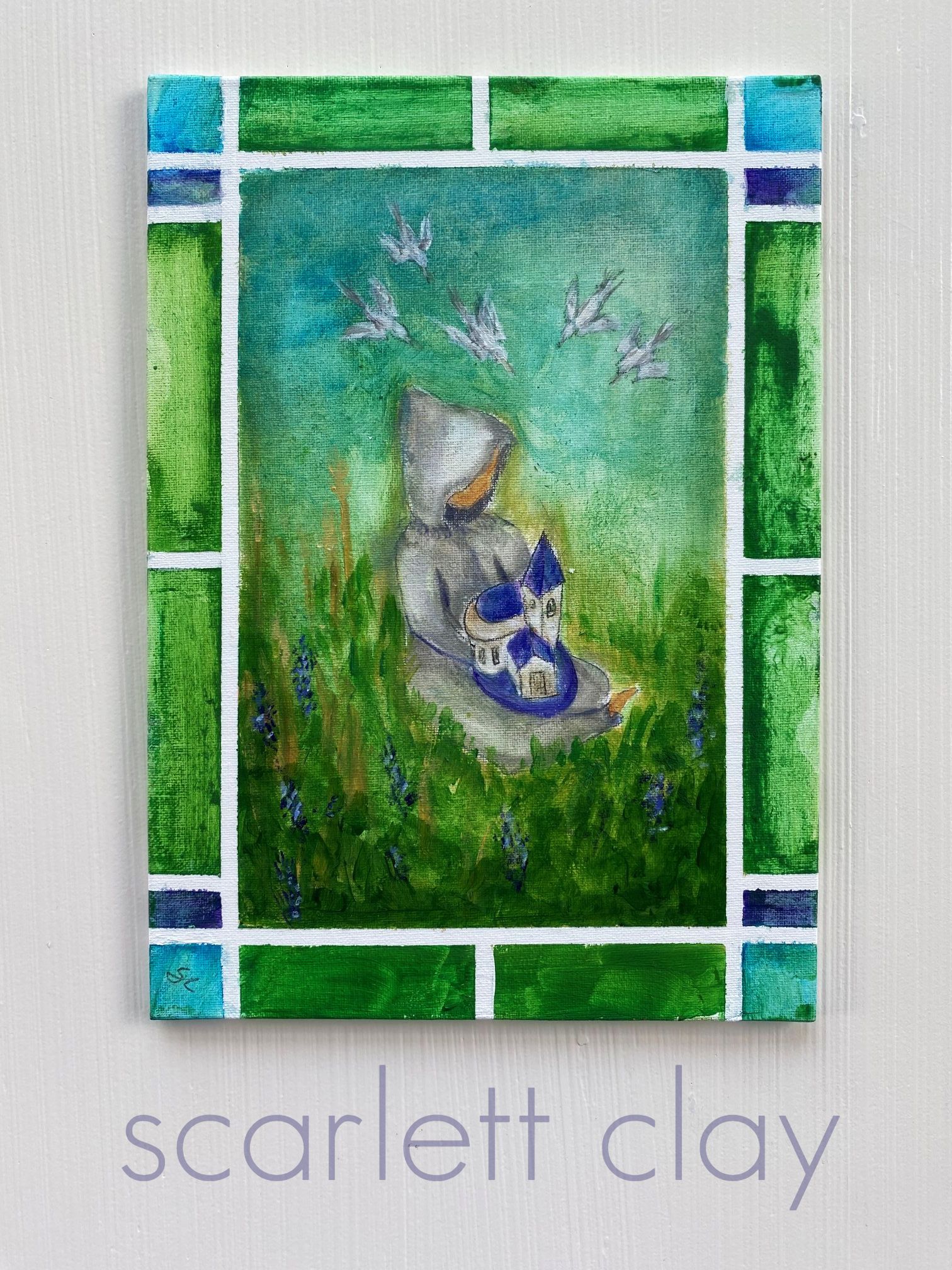
While I was at the Abbey, I was asked to contribute a piece of original artwork to a silent auction coming up in April for the mercy ministries of St. Bartholomew’s. I knew I wanted to capture the feeling I had after meeting with Fr. Kelley, the feeling of hope in the midst of uncertainty.
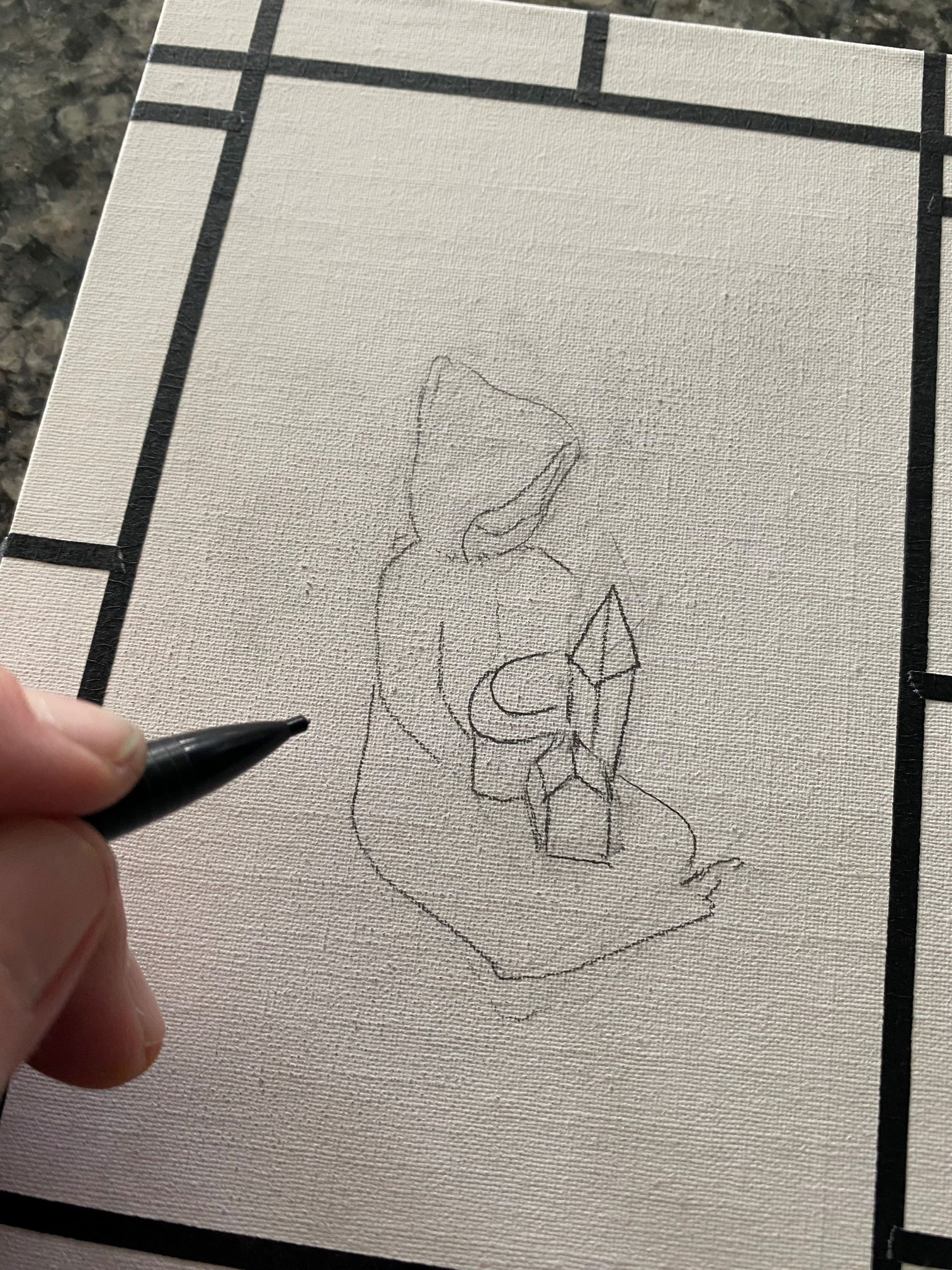
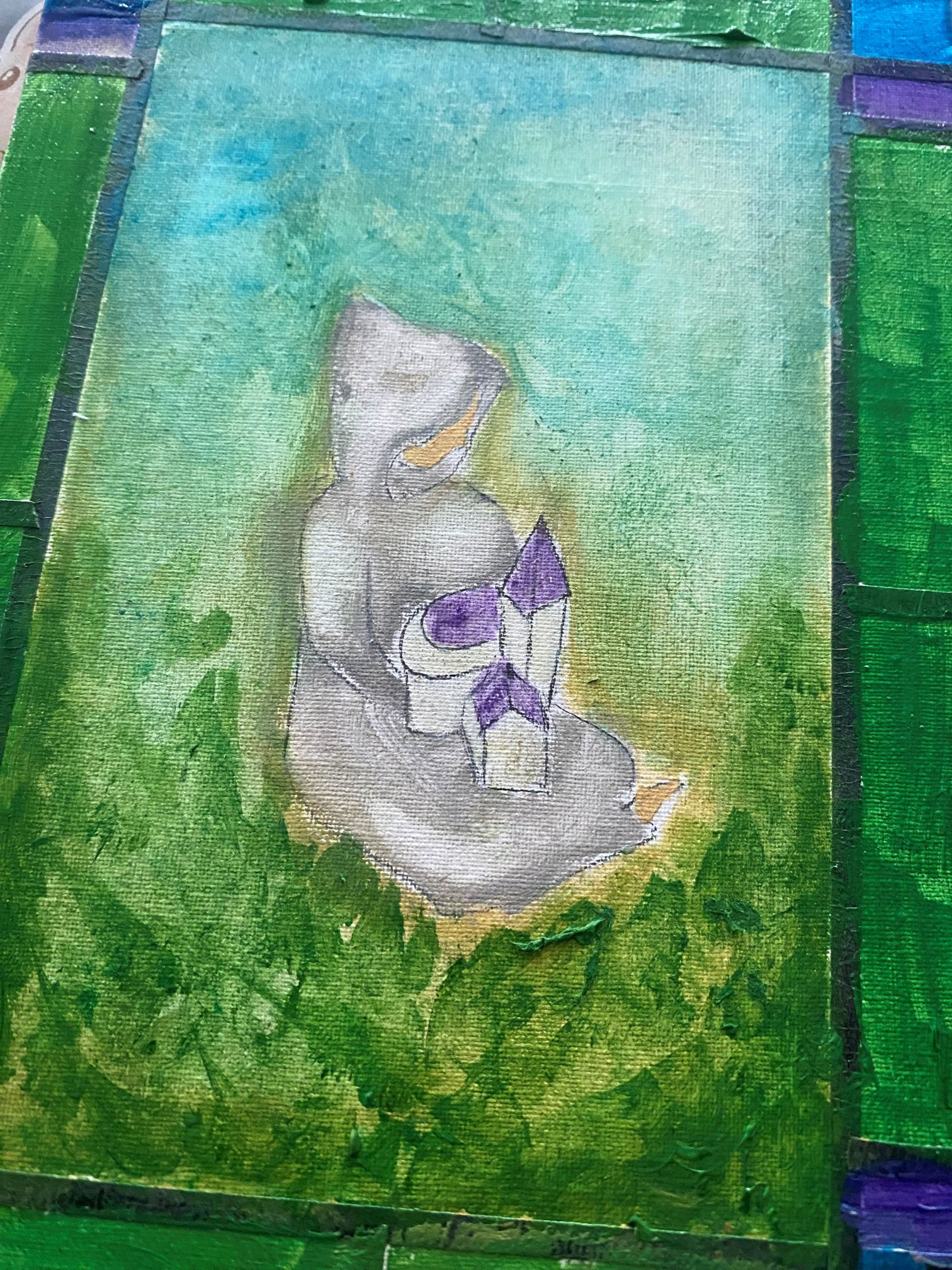
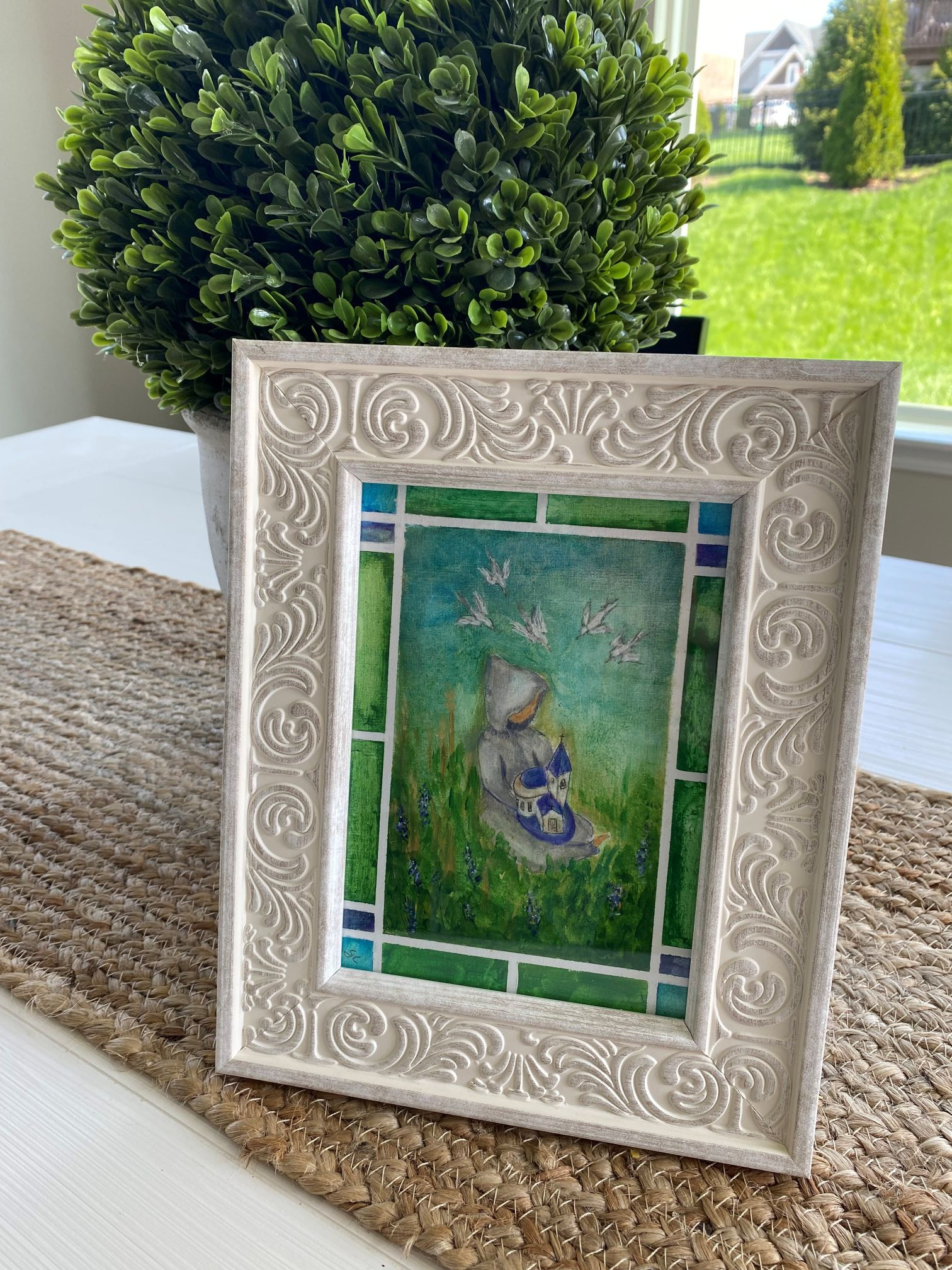
The result is this 5″x7″ acrylic painting titled, “Hope for the Abbey.” I took inspiration from medieval paintings where saints or clergy are holding miniature models of churches to symbolize their devotion. In this painting, a Trappist holds a miniature model of the Abbey. This symbolizes the way Fr. Kelley and other Trappists at Gethsemani hold the Abbey in prayer, hopeful and expectant. Hope is also represented by the bright greens in the paintings and the birds, which recall the joyful birdsong and verdant transformation of the Abbey grounds in springtime.